Free tool · from The Poor Pay Twice
Cost Per Use Calculator
The cheap one costs less today. Does it cost less over ten years? Put in two prices, how long each lasts and how often you use it, and see the true cost per year and per use.
Free, with no sign-up. It runs in your browser, and nothing you type is sent to us.
How it works
Spread the price over its life, then divide by the uses
- Enter both options: what each costs, how many years it lasts, and how often you use it.
- Add what each costs to keep going (repairs, resoling, filters, servicing) and anything you could sell it for at the end.
- The calculator spreads each price over its life, adds the upkeep and subtracts the resale. That is the true cost per year. Divide by the uses and you have the cost per use.
- It compares both over the same number of years, and works out how long the better one must last to be the cheaper buy.
To do it on paper: (price − resale) ÷ years it lasts + upkeep per year is the cost per year. Divide that by the uses in a year for the cost per use.
Worked example
Two pairs of boots, ten years
A pair of cheap boots costs $60 and lasts about a year. A pair of welted leather boots costs $240 and lasts ten years if you have them resoled, which averages $15 a year.
Over ten years the cheap boots cost $600, because you buy them ten times. The good boots cost $240 plus $150 of resoling: $390. Worn five days a week, that is 23 cents a wear against 15.
The good boots stay cheaper as long as they last more than about five and a half years. That margin is the whole argument: the person who can only find $60 today pays more for boots over a decade than the person who could find $240.
Be honest with the numbers
When the cheap one is the right call
- You will use it a handful of times. A tool for one job, an outfit for one event, a first try at a new hobby.
- It will be outgrown or out of date before it wears out. Children's shoes, most phones, anything bought for fashion.
- The better one would go on a credit card. Interest at 25 percent changes the sum. Let the cheap one bridge the gap while you save the difference.
- The better one is only better in branding. Paying for a name is not paying for durability.
Two of the built-in examples, the mattress and the laptop, come out in favour of the cheaper option. Run your own numbers rather than trusting a rule.
The book behind the tool
Being broke is expensive. This book is about the bill.
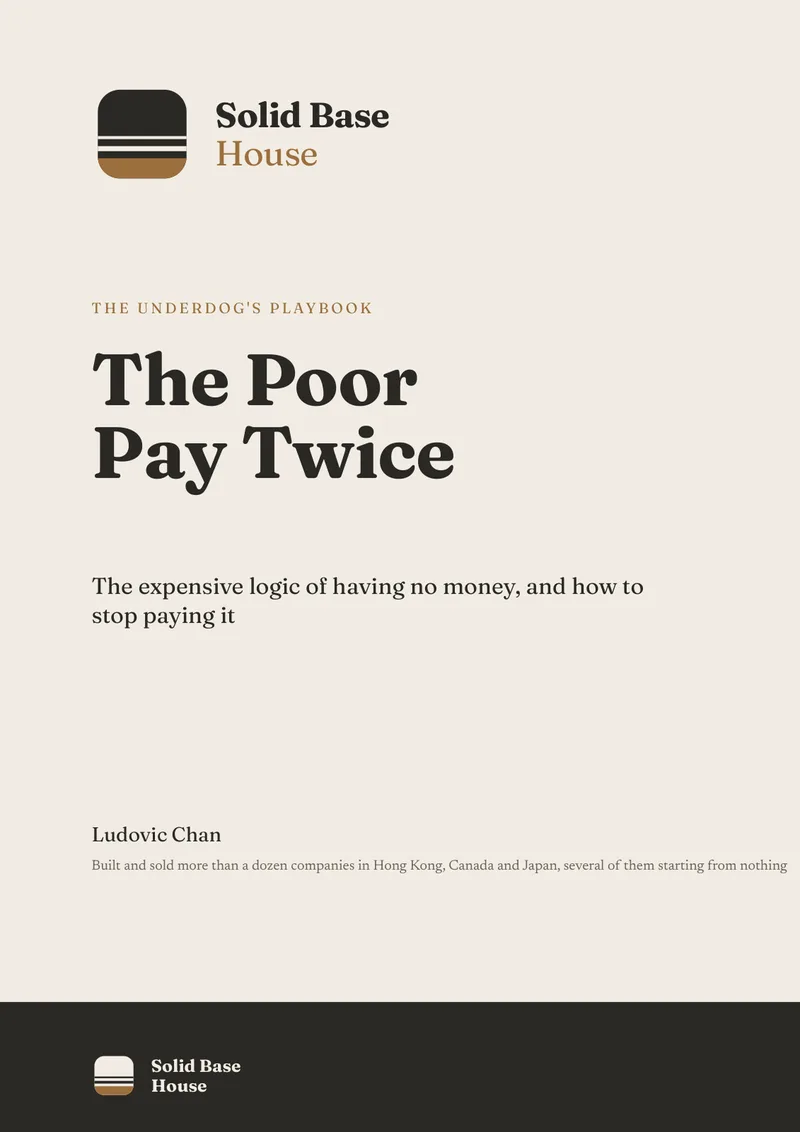
The Poor Pay Twice is about the poverty premium: the cheap boots bought every winter, the fees and interest that only people without savings pay, and the second bill that arrives later in time, health and choices. Thirty short chapters on the habits that keep people paying it, and the rules followed by the people who stopped. This calculator comes from Chapter 28, Thrift is attention: pay the per-year price for the good coat, not the ticket price for the cheap one.
Buy the PDF · US$29.99 About The Poor Pay Twice
Seven-day guarantee. Instant download through Payhip's secure checkout.
A second pair of eyes
Want someone to go through your numbers with you?
The book has an optional call with the author, built around the poverty-premium audit in its first appendix.
Book + 45-minute money reset call
US$229.99
The PDF, plus a private 45-minute call with the author on your completed audit: what to stop first, the reserve, the debts, the cover, and the one thing to build next, followed by a one-page written plan for the next ninety days.
Fixed-fee advisory
From US$4,000
For owners past the beginner stage and stuck on one specific decision: positioning and pricing, a marketing system a small team can run, payments, a product launch. A fixed fee, agreed before anything starts.
More free tools
Other tools from the same shelf
Over-Explaining Checker
From Rich People Don’t Explain
Paste an email. See every apology, hedge and justification highlighted, get a directness score and a plainer draft.
Open the toolBusiness Model Finder
From Somebody Else Pays
Tick what your business already has and what holds it back. Get three models to test, a payback check and the seven tests.
Open the toolObjection Reply Builder
From Your Phone Is a Shop
Choose what the buyer said. Get honest replies for a message, an email or a call, plus what not to say.
Open the toolQuit Your Job Calculator
From Nobody Is Coming to Promote You
Six months at 75% of your pay, six months of savings, more customers than time. See which you have, and when the rest arrives.
Open the toolQuestions
Cost per use, answered
What is cost per use?
The price of something divided by the number of times you use it, after adding what it costs to maintain and taking off what you can sell it for. A $240 pair of boots worn five days a week for ten years is worn 2,600 times: about 9 cents a wear before upkeep. A $60 pair that lasts one year is worn 260 times: 23 cents.
How do I work out cost per wear for clothes?
Take the price, subtract what you could sell it for later, and divide by the number of times you will realistically wear it. A $150 coat worn twice a week for five winters of 20 weeks is worn 200 times: 75 cents a wear. Be honest about the wears. That is where most people flatter the expensive option.
Is buying quality always cheaper in the long run?
No. It is cheaper when the better item lasts long enough to repay its higher price, and you actually use it for that long. The calculator shows the break-even life: if the better one would need to last longer than it realistically will, the cheap one wins. Two of the built-in examples show exactly that.
What if I can’t afford the better one right now?
Then don’t borrow at credit-card rates to buy it, because interest can wipe out the saving. Buy the cheap one as a bridge, put the difference aside each month, and buy the good one with cash. The Poor Pay Twice calls this building the base before the dream.
Does the calculator include inflation or interest?
No. It compares money at today’s value, which is fine for everyday purchases over a few years. For a large purchase paid off over years, add the interest to the price before you compare.
What is the poverty premium?
The extra that people with little money pay for the same things: buying small sizes, replacing cheap goods more often, and paying fees and interest that people with savings avoid. Chapter 1 of The Poor Pay Twice is about it, and Appendix A is a checklist for finding it in your own spending.
Is anything I type stored?
No. The calculation happens in your browser and nothing is sent to our server. The share link keeps your numbers in the part of the address after the # sign, which browsers never send to websites.